
Online pharmacy platform Tata 1mg turned a unicorn after raising close to $40 million in a funding round led by Tata Digital, media reports said. The company was yet to comment on the valuations till the time of going to press. 1mg has raised $230.8 million across 16 rounds, including this one.
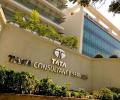
The IT major will give an anniversary hike for lateral hires as they complete a year at the company. And, these employees were entitled to the annual salary revision that followed the anniversary hikes.

A few days back, Finance Minister Nirmala Sitharaman urged the start-up community and public to deal in cryptocurrency with caution because everything that was floating around was not currency. In the first week of August, the country's top nine crypto exchange platforms were summoned by the Directorate of Enforcement (ED) in Hyderabad. The exchanges were questioned for money laundering, especially over a number of Indian non-banking financial companies and their fintech partners for predatory lending practices in violation of the Reserve Bank of India (RBI) guidelines and by using tele-callers who misuse personal data and use abusive language to extort high interest rates from the loan takers.

After a recent fall in profit, Masayoshi Son of SoftBank announced that the Japanese tech investor will look at dramatic cost-cutting. Before he does that, investments in India for calendar year 2022 (CY22) will fall radically, observed sources in the know. Last year, the company had invested around $3.2-3.5 billion in the Indian start-up ecosystem - almost 10 per cent of the total investment the sector received. For CY22, the investments may not even touch $1 billion.

'I am seven months into the job, but it feels like seven years.'

Microsoft has become the first global Big Tech company to join the Open Network for Digital Commerce (ONDC), an Indian government initiative for developing a first-of-its-kind open network for digital commerce. The world's second-largest technology firm intends to introduce social e-commerce via its app in the Indian market later this year. ONDC is expected to open to the public in Bengaluru over the next fortnight as it enters into the next phase of the pilot for further fine-tuning before rollouts in other cities, according to a source in the know.

The company's decision may impact new projects, which are likely to get delayed, said sources in the know. Among the IT players that work with Macy's are Accenture, Cognizant, Tata Consultancy Services (TCS), and Infosys. Macy's is among the top 5-10 clients of these companies.

Online food delivery aggregator Zomato is on an internal rebranding exercise by moving to a multiple chief executive structure for its businesses that will be housed under a larger organisation called Eternal. In an internal message to employees, Founder and Chief Executive Officer (CEO) Deepinder Goyal said the company is at a stage where it has matured from running a single business to running multiple and large companies. The restructuring is happening after the shareholder approved the Blinkit acquisition.
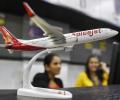
In an unprecedented action, Indian aviation regulator DGCA has directed low-cost airline Spicejet to operate only 50 per cent of its flights for eight weeks. This follows an unusually high number of incidents involving the airline, raising safety concerns. The curtailment of capacity is unlikely to have any commercial impact on the airline owned by entrepreneur Ajay Singh. SpiceJet already operates less than 50 per cent of the flights it had filed for the summer schedule.

Tata group-owned AirAsia India's inability to get approval for international flights is hurting UDAN, the Indian government's regional air connectivity project that also aims to link cities in Northeast India and Odisha to places abroad. Sources said the civil aviation ministry is waiting for the low-cost airline to come under the full ownership of Tata Sons and become part of Air India, the former state-owned carrier now owned by the private conglomerate, before allowing it to operate international flights. Tata owns 84 per cent stake in AirAsia India and it is understood that the group will complete the process of buying rest of the stake by July's end.

A quick look at the Q1FY23 performance of top-tier IT services players shows that they are still far away from getting a grip on managing attrition. Talent retention has eroded not only their margins but also any gains they may have made from rupee depreciation. Despite robust growth numbers and strong deal pipelines, margins for all the players -- TCS, Infosys, HCL Technologies and Wipro -- have continued to shrink at a pace that has had the street surprised.

Failure to reinstate salary even two years after the drastic cuts has landed the airline industry in a massive industrial relation crisis. While employees of Air India had organised a strike back in 2011, it is for the first time that private airlines are facing serious stress related to workers. IndiGo witnessed two of them, back to back. In the first instance, around 50 per cent of the IndiGo flights were delayed as a large number of crew members went on mass sick leave, apparently to participate in a rival airline's walk-in job interview.

Earlier last month, for the first time ever, an anonymous hacker was served with a restraining order as a non-fungible token (NFT), reports Shivani Shinde.

Tata Neu, the super app from the Tata group, has been downloaded by over 7 million users within seven weeks of its launch. And, the company wants to ramp this up to 150 million users in the next two years, said senior executives of Tata Digital in an internal magazine of the Tata group. According to data from App Annie, a mobile app tracking platform, the Tata Neu app has been downloaded by over 11 million users.

Jet Airways is looking to lease around 20 Airbus A320 aircraft from lessors by 2024 as it aims to restart operations and fly international routes in the next one-and-a-half years. Jet's A320 aircraft fleet, according to sources, will be a mix of the Ceo and the more fuel-efficient Neo variants. These planes were originally intended for Russian airlines but could not be delivered following western sanctions on Russia over its Ukraine invasion.

More than 1,600 employees of Air India, the former state-run carrier now owned by the Tata group, have opted for voluntary retirement under a scheme announced on June 1. These employees comprise 22 per cent of permanent staff (around 7,000). The airline has a total employee strength of around 10,800, including those on contract.

Two years after the Centre's flagship village electrification scheme Saubhagya concluded with the government claiming 99.9 per cent success, several states have added close to 1.1 million rural households that remain to be connected to the electricity grid. This new list includes earlier unwilling households that have now agreed to have a metered connection and also those built or discovered in the states' surveys since 2019. Assam and Uttar Pradesh are the states that have the majority of such new additions.

'A lot of the emphasis when we hire graduates is the learning for these new technologies -- whether it's cloud and digital data analytics, cybersecurity, or IoT, but also some of the new ones, such as Metaverse or other newer areas.'

'We spent considerable time re-skilling all the employees, and then we created a new focus called the 'One Infosys'.'

Google's chief privacy officer, Keith Enright, has warned policymakers that frequent and large-scale sharing of citizen data, even if anonymized, can damage users' privacy. Pointing to research that shows data sets lose their anonymity if shared consistently over time, he said: "I would encourage policymakers and companies to be extremely circumspect while proceeding in that direction." Anonymization is a technique that removes or modifies personally identifiable information, resulting in data that cannot be associated with any one individual.
 © 2026 Rediff.com - Advertise with us - Disclaimer - Privacy Policy - Sitemap - Feedback - About us - Terms of use - Grievances